Elevated Loft Beds for Small Spaces
Affiliate disclosure: This post may contain affiliate links. If you make a purchase through these links, Crafted Motion may earn a commission at no extra cost to you.
Most bedrooms are doing exactly one thing with their square footage: wasting it. You’ve got eight or nine feet of vertical space above your mattress and nothing up there but air. Elevated loft beds flip that equation completely, the bed goes up, and suddenly you’ve got a whole second layer of usable space below. It’s not a college dorm hack anymore. The designs coming out right now are genuinely stunning.
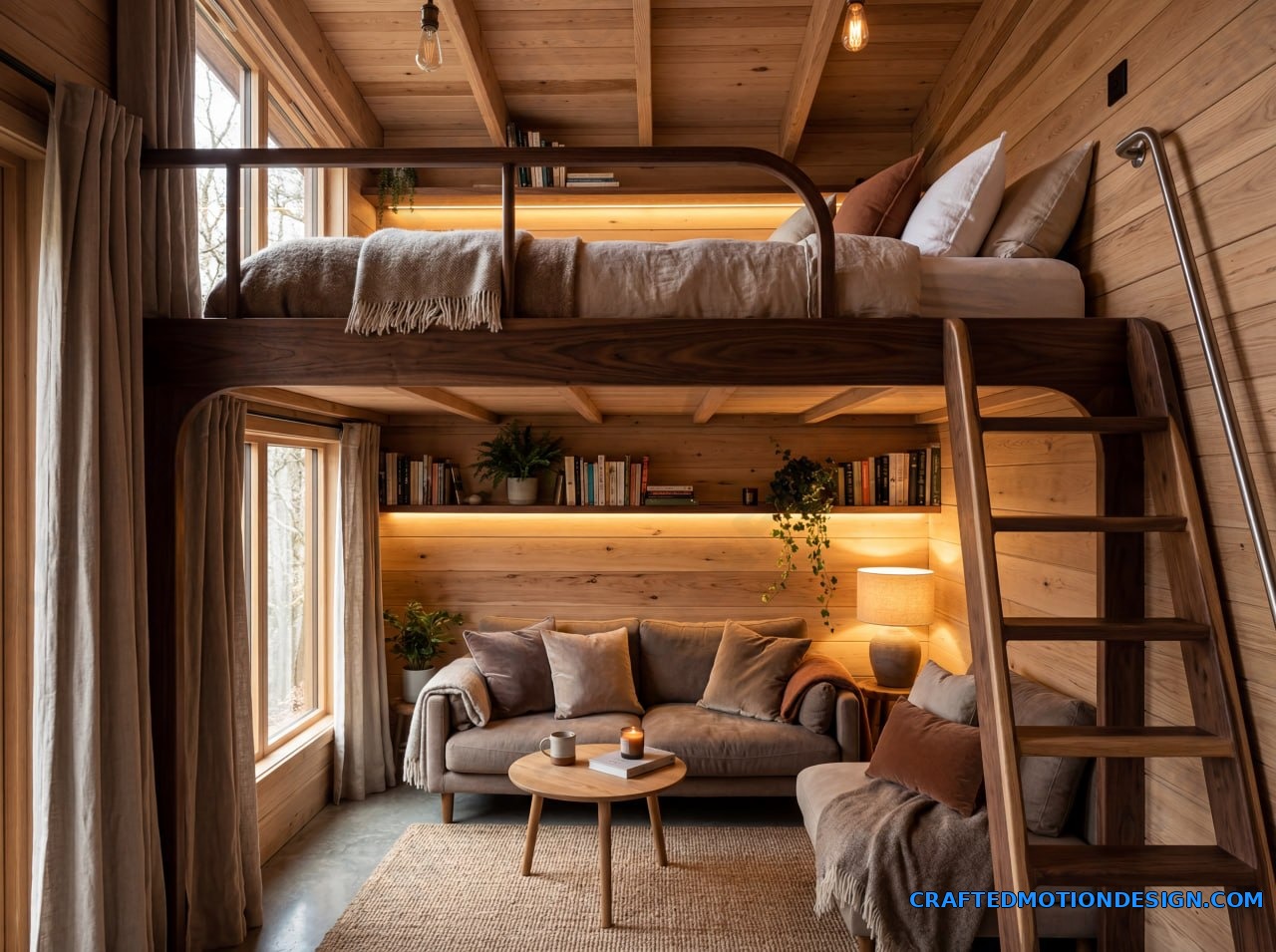
What Makes an Elevated Loft Bed Different?
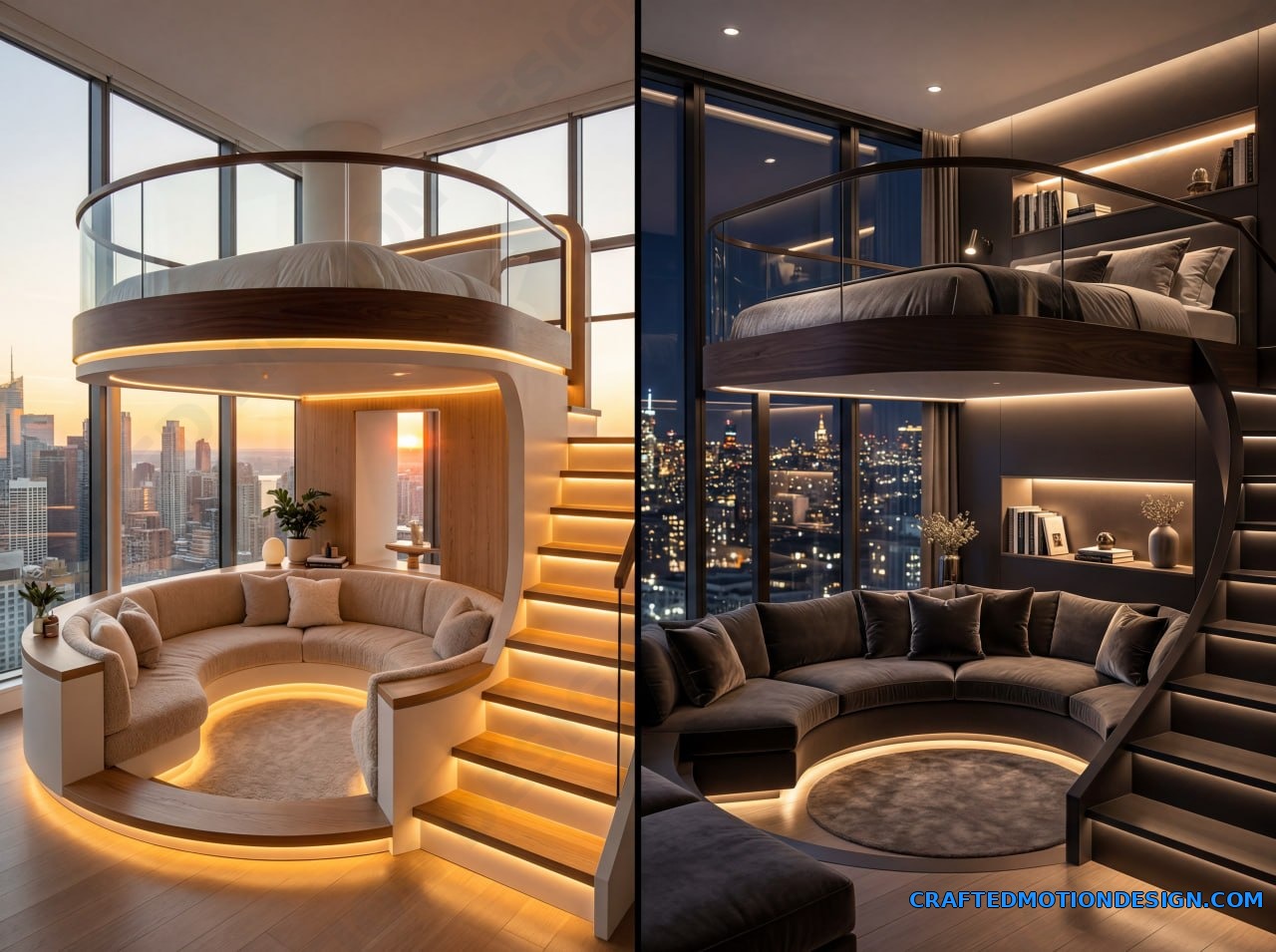
A standard loft bed sits high enough to create clearance underneath, usually enough to slide in a desk or a dresser. That’s useful. But an elevated loft bed goes further. We’re talking ceiling heights of 8 to 10 feet with the sleeping platform positioned high enough that the space below functions as an actual room. Not just storage. A room.
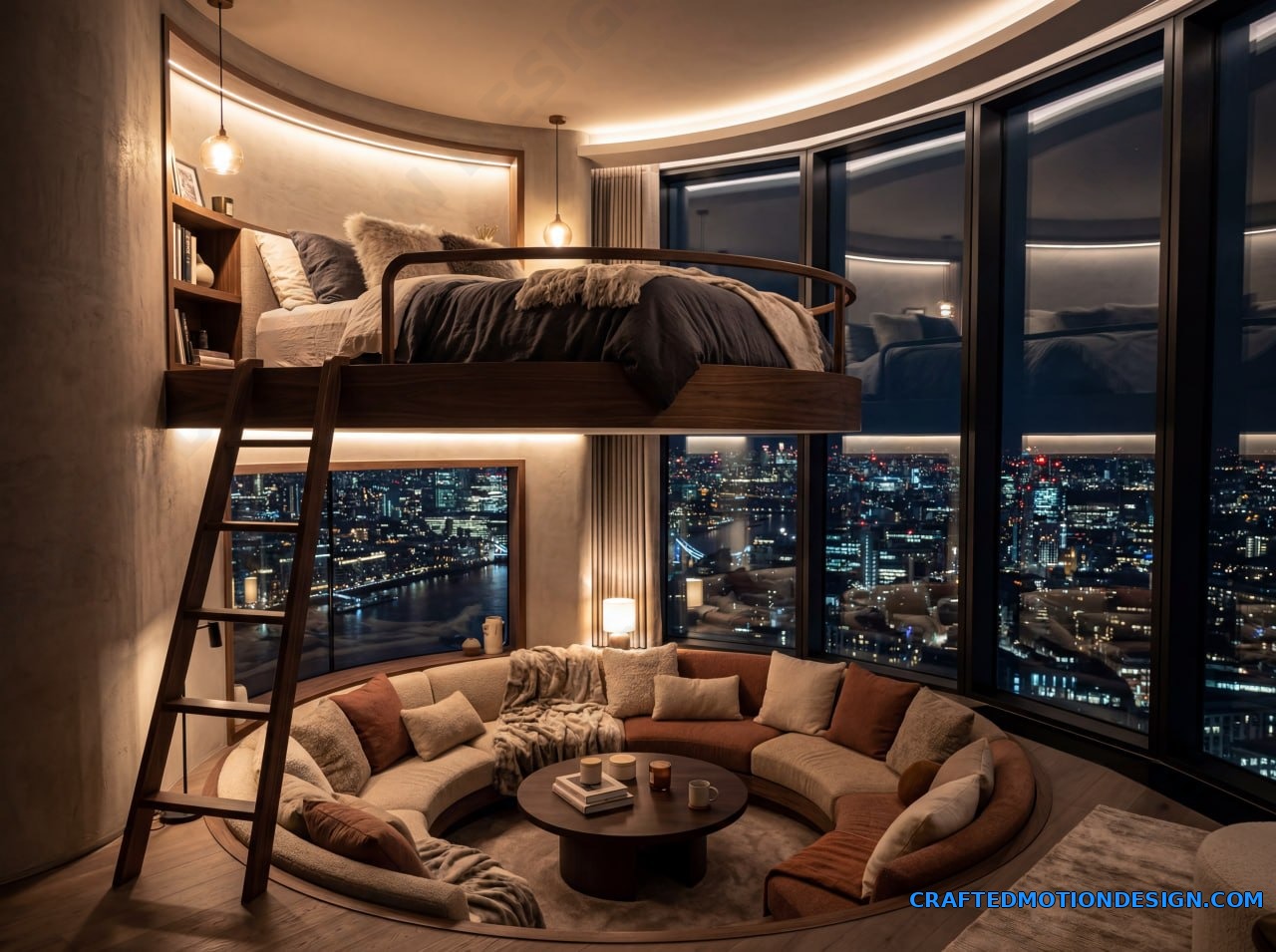
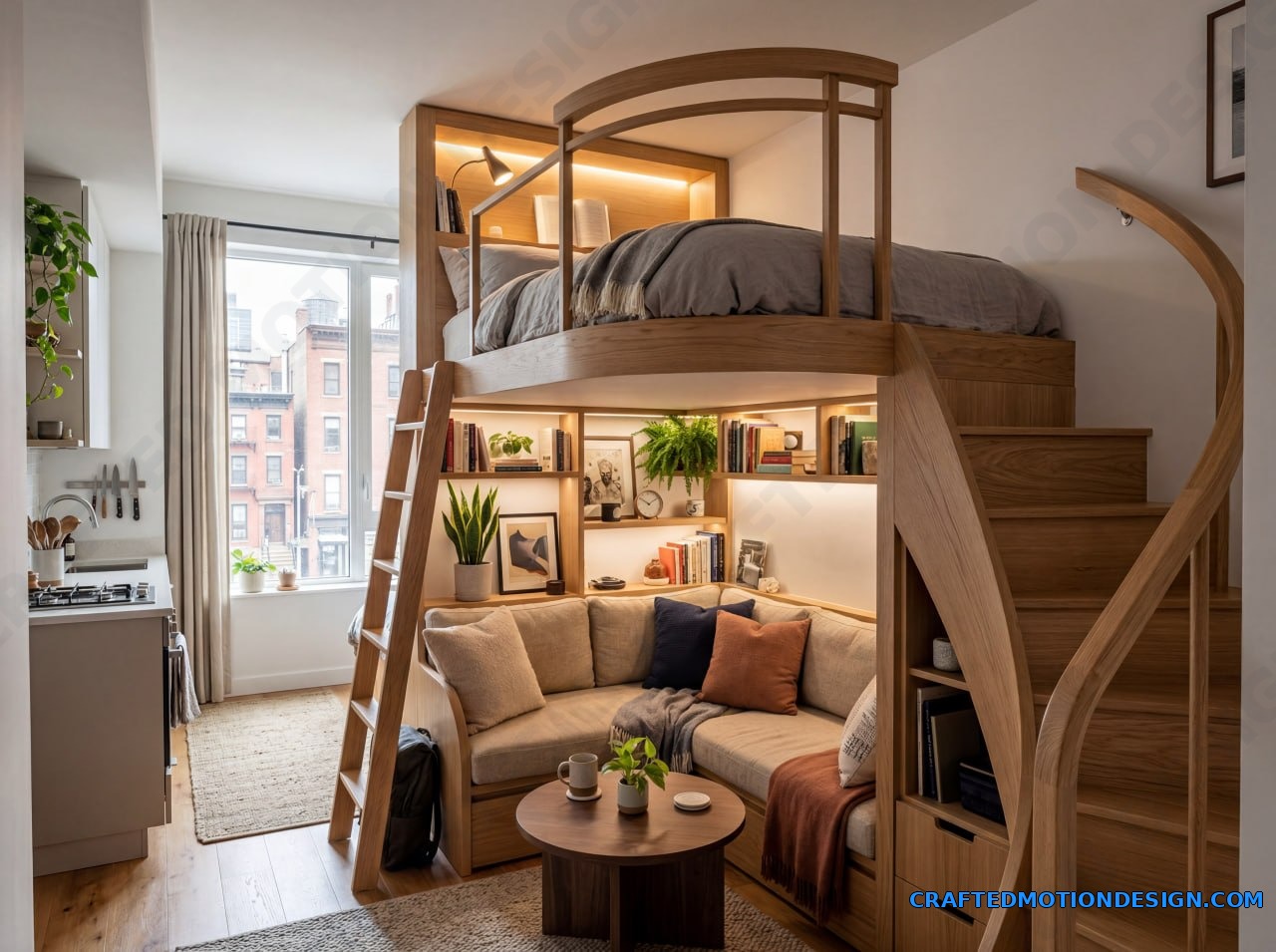
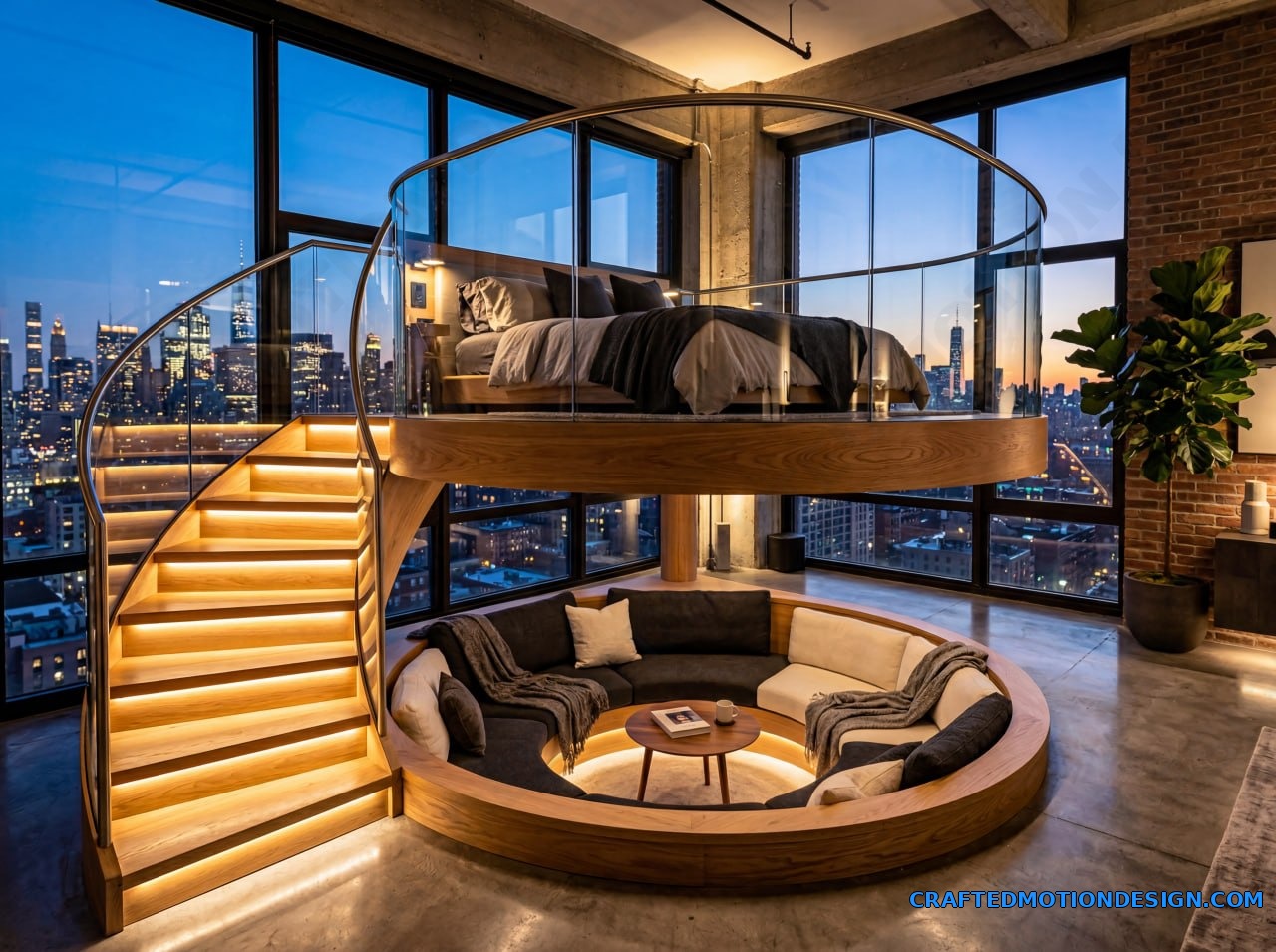
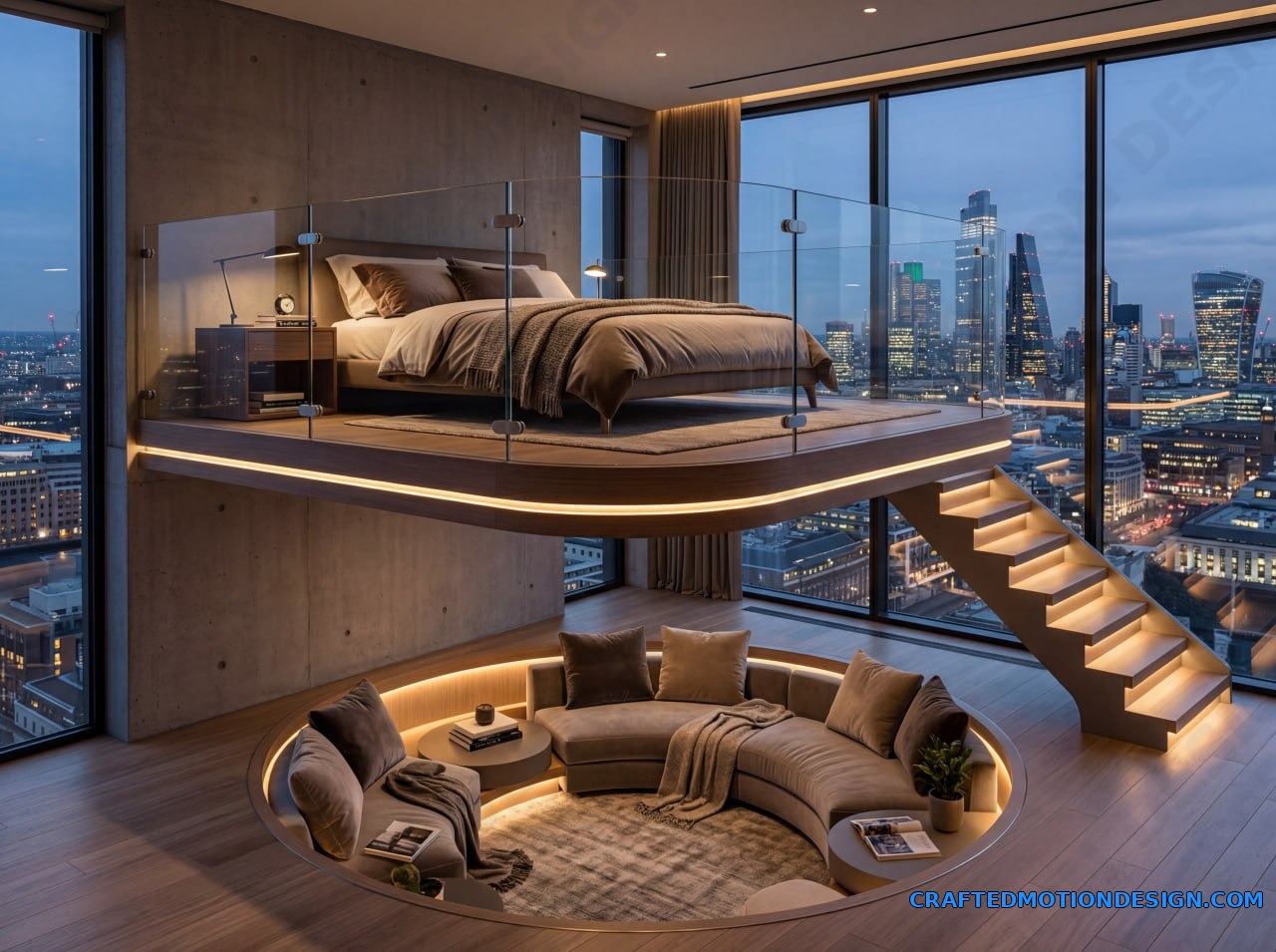
Think full-height wardrobes, a proper reading nook, a mini home office setup, even a lounge corner with a small sofa. The bed is almost secondary, it’s the architecture underneath that does the real work. This is the difference between a piece of furniture and a spatial redesign.
Structurally, elevated loft beds are either freestanding, relying on their own frame and weight distribution, or wall-anchored, which gives you more stability and a cleaner look. The wall-anchored versions tend to feel more permanent and architectural. The freestanding ones are more flexible if you’re renting or plan to move. Both work. It just depends on what you’re optimizing for.
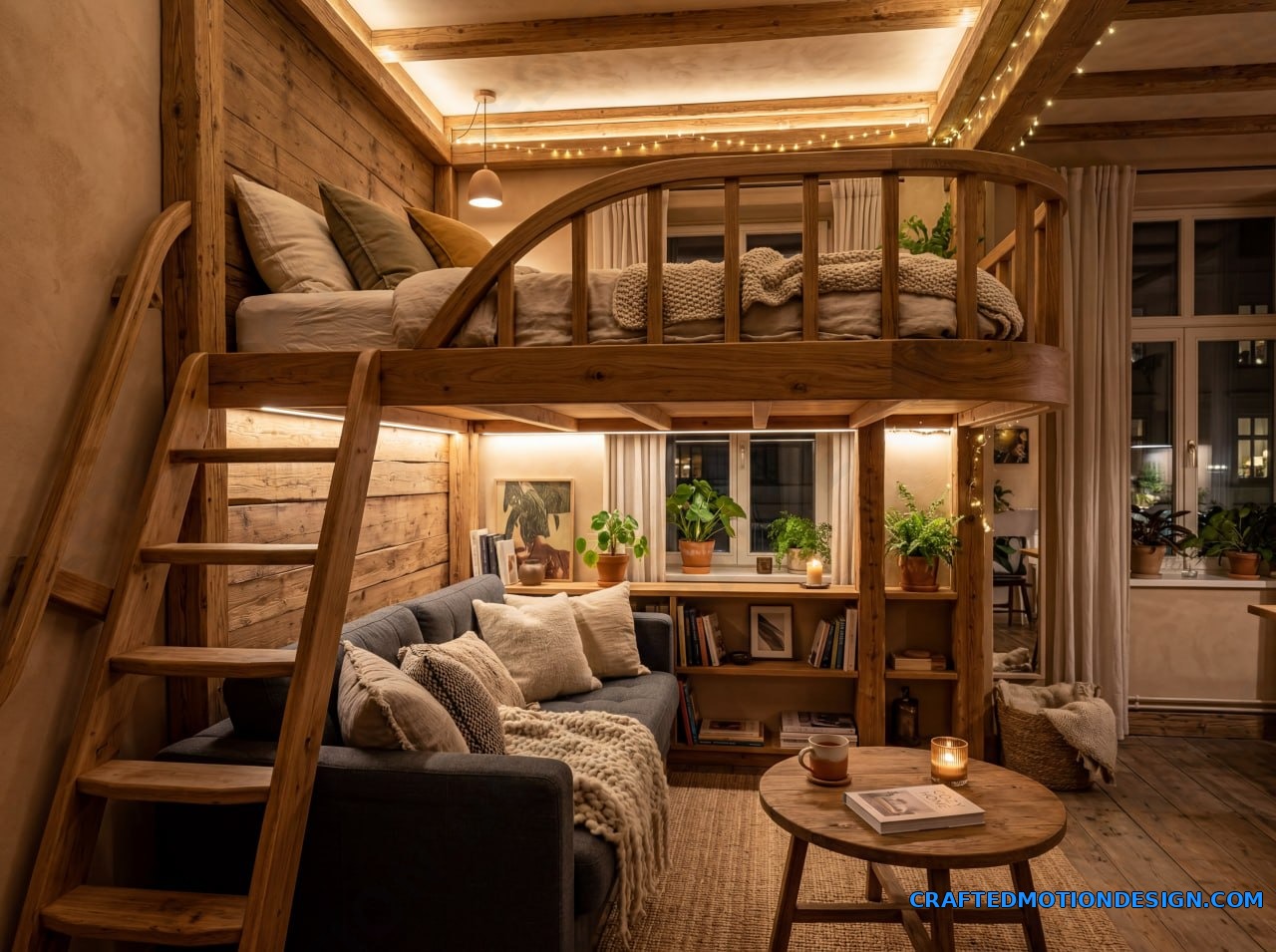
Why These Designs Are Going Viral
Real estate is expensive. That’s the short answer. When you can’t afford more square footage, you start thinking vertically. Studio apartments and small one-bedrooms are being transformed by this concept, and people are sharing those transformations everywhere, TikTok, Pinterest, Instagram Reels. The before-and-afters are genuinely jaw-dropping.
But it’s not just a small-space hack anymore. Homeowners with perfectly spacious rooms are installing elevated loft setups in kids’ rooms, teen bedrooms, and guest suites because the design potential is just that good. There’s something architecturally interesting about a room within a room. It creates zones. It creates cozy. It creates the kind of space that people actually want to spend time in.
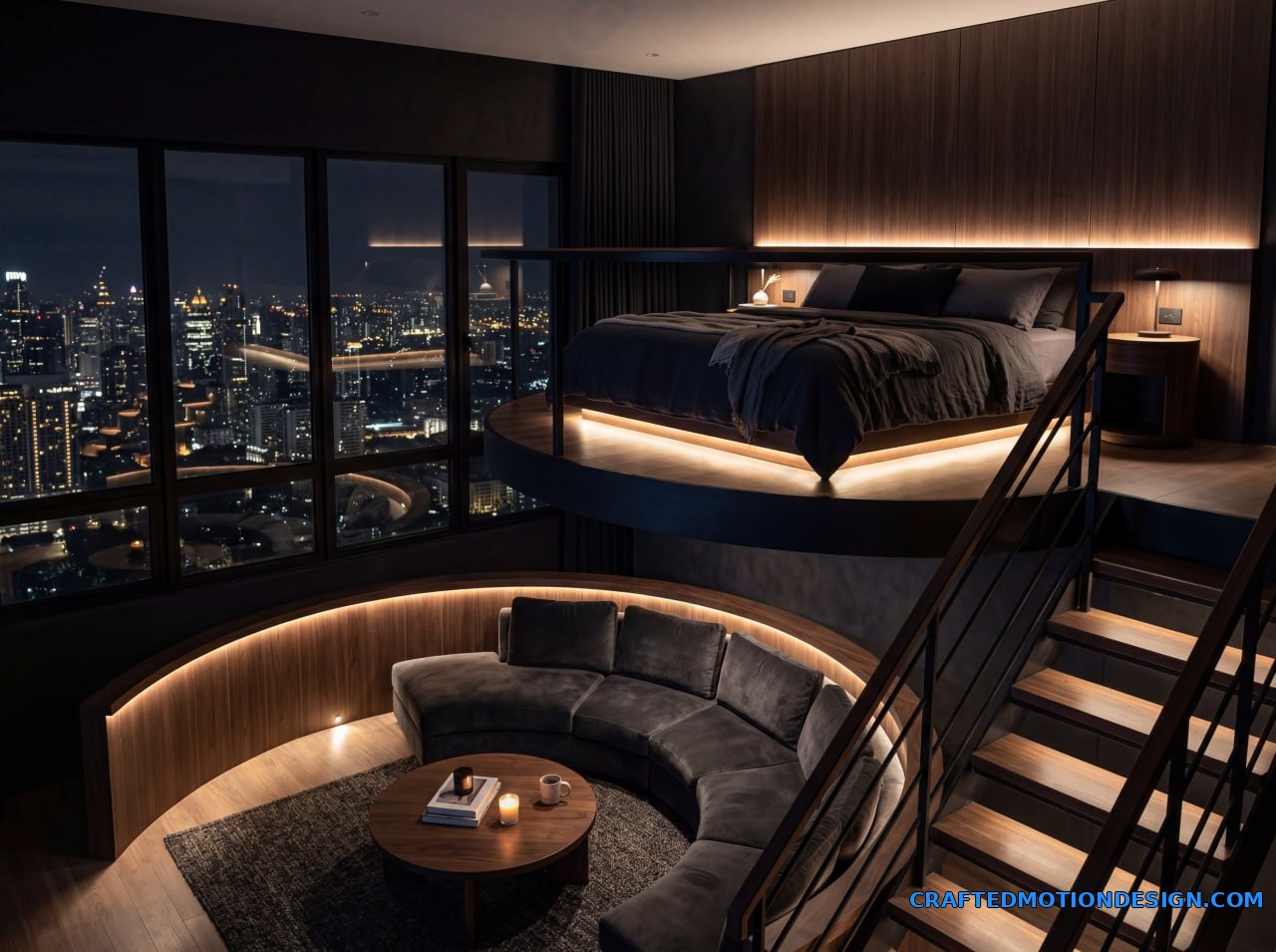
The aesthetic angle matters too. The best elevated loft builds right now lean into specific design languages, Japandi minimalism, dark moody maximalism, warm cabin-core, and they look like something out of a high-end interior design magazine. That visual impact is what gets shared. And when something gets shared, it becomes a trend. That’s exactly what’s happening here.
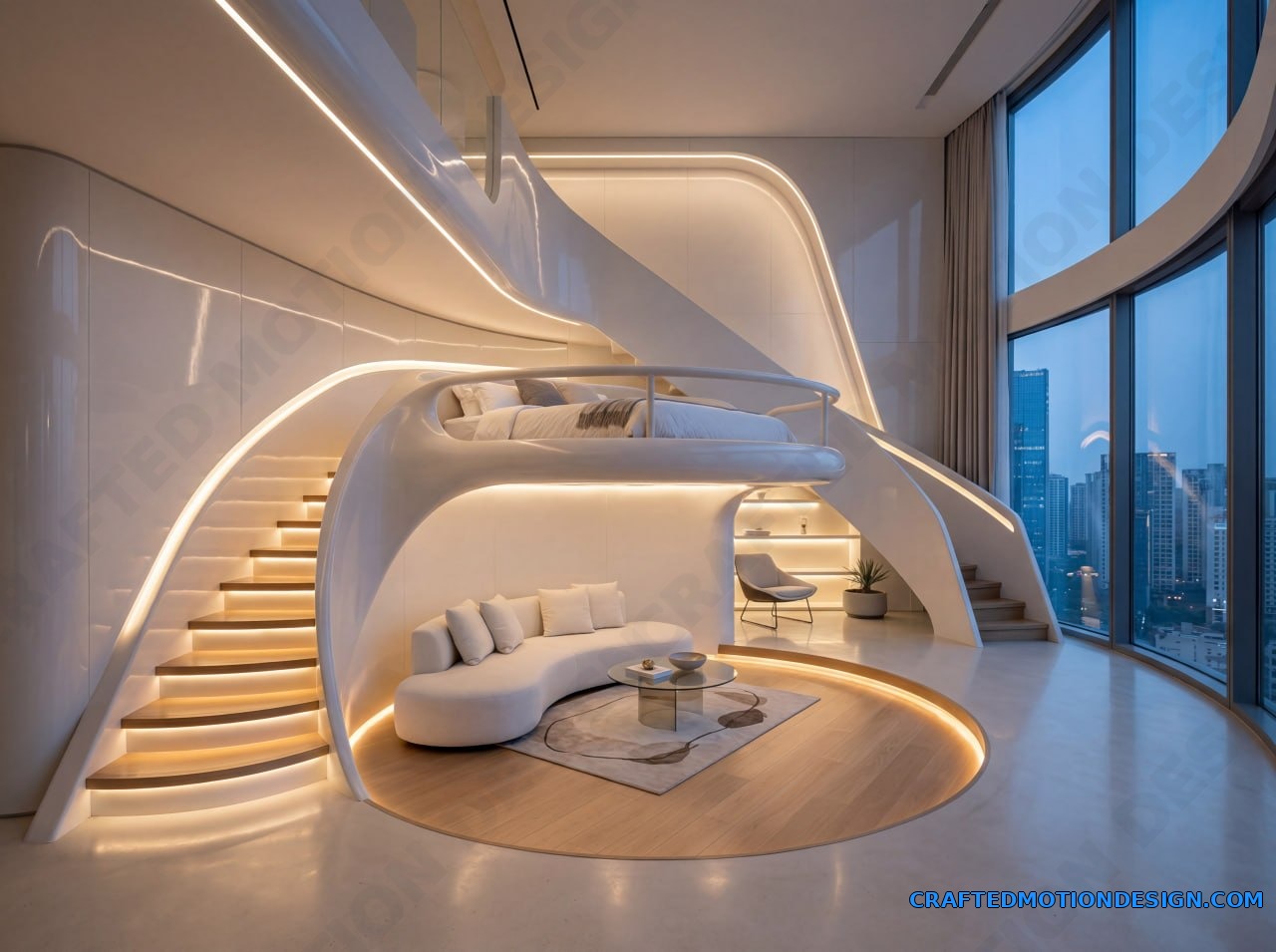
Who Elevated Loft Beds Are Actually For
Let’s be real about who this works for and who it doesn’t.
Kids and teens are the obvious fit. A loft bed with a play area or homework station below is a dream setup for a growing kid. The space feels like their own little world, and parents get the bonus of a tidier, more functional room. Teens especially love the privacy and the sense of having designed their own space.
Young adults in small apartments are arguably the biggest adopters right now. If you’re working from home in a studio, an elevated bed that creates a dedicated sleeping zone above a desk setup is a legitimate quality-of-life upgrade. It creates psychological separation between work and rest, something that’s genuinely hard to achieve when everything shares one room.
Guest rooms that need to do more. A spare bedroom that doubles as a home office is a classic problem. An elevated loft bed solves it elegantly. Guests sleep above; the workspace lives below and stays functional the other 350 nights of the year.
Who it’s not great for: people with mobility issues, anyone who hates climbing, or rooms with ceilings under 9 feet. Below that threshold you’re going to feel cramped either above or below the platform, and neither is a great trade.
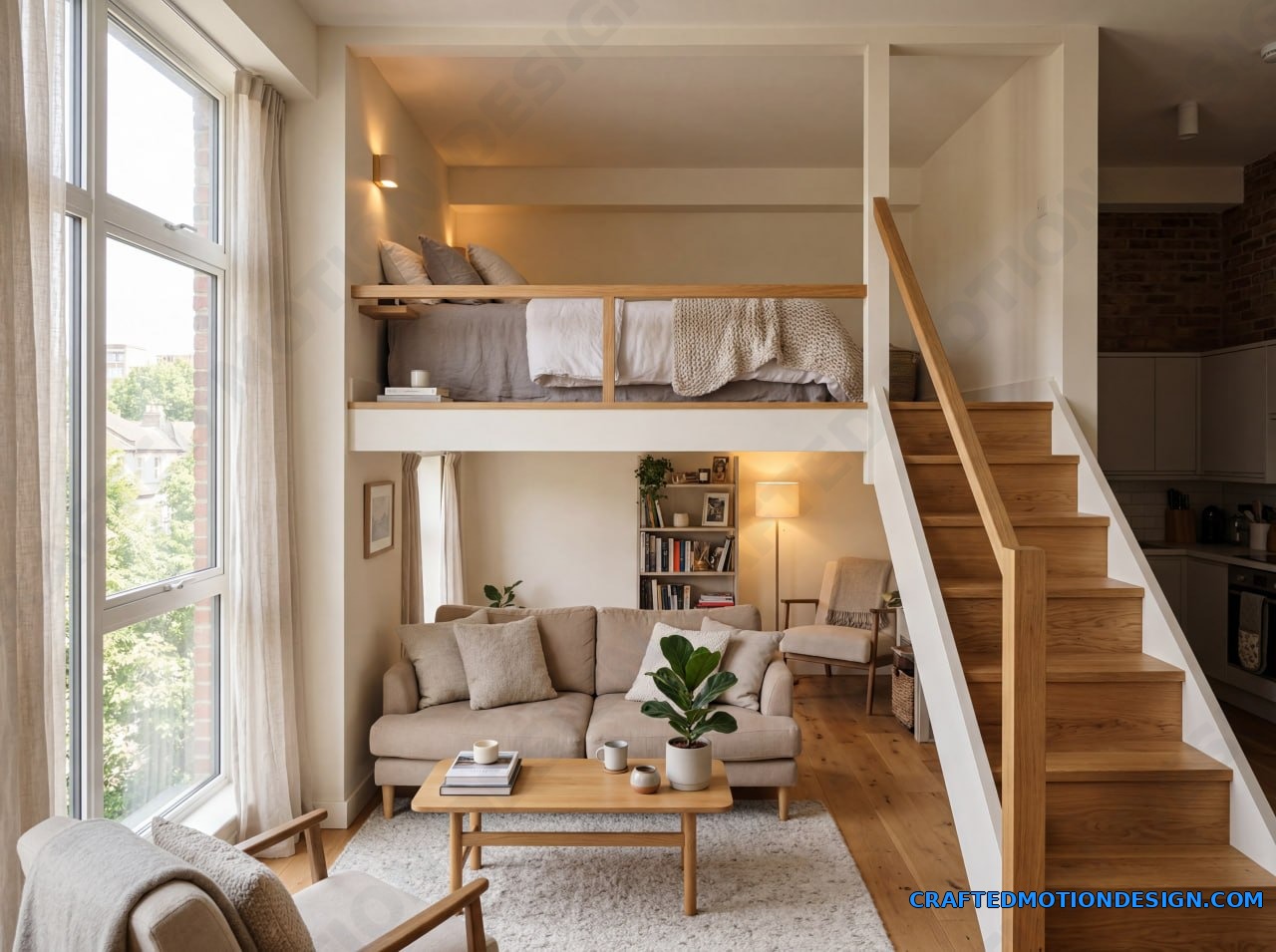
What an Elevated Loft Bed Costs
The range is wide, and the variance makes sense when you understand what drives the cost.
At the entry level, you’re looking at prefab metal or pine frame loft beds. These start around $300 to $600 and can be found at most major furniture retailers. They do the job. The aesthetic is basic, the customization is minimal, and the build quality is what you’d expect at that price. Fine for a kid’s room, not impressive enough for an adult space you’re trying to make a statement with.
Mid-range options, solid wood frames, better joinery, more design intentionality, sit in the $800 to $2,000 range. This is where things start getting interesting. You can find genuinely good-looking pieces here, especially from smaller furniture makers and online brands focused on the category.
Custom builds are where the real magic happens, and they reflect that in price. A custom elevated loft built to your ceiling height, your aesthetic, your specific use-case? You’re probably spending $3,000 to $8,000 or more depending on materials and who’s doing the work. But these builds also tend to look like they were designed by an architect. They’re not furniture, they’re room architecture. For the right space and the right person, it’s worth every dollar.
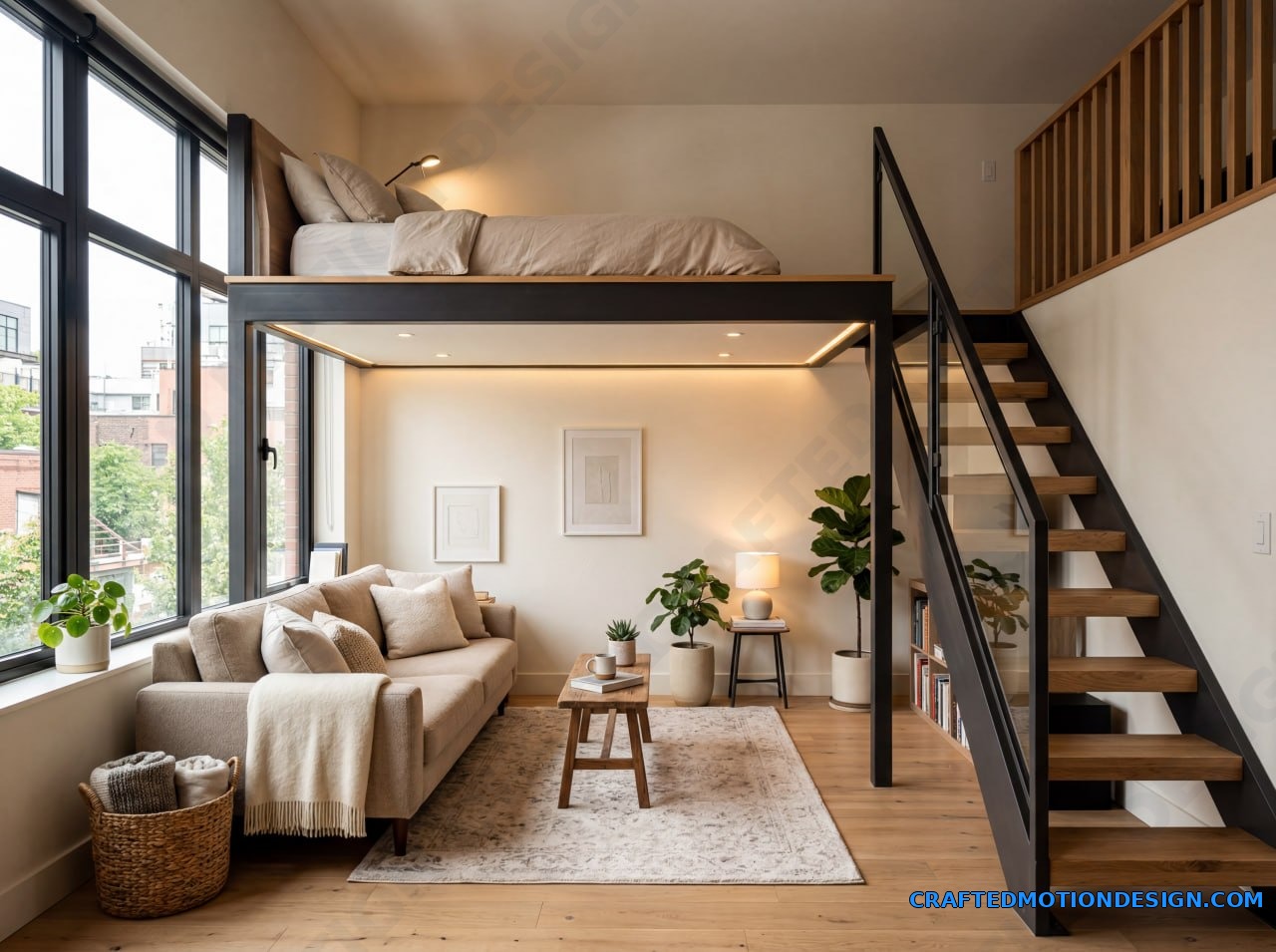
DIY is also a legitimate path here. If you’re handy and willing to do the research, building a wall-anchored loft platform with dimensional lumber can run $500 to $1,500 in materials. There are solid plans and communities around this, and the results can be genuinely impressive. The investment is in time and skill, not just money.
How to Make It Work in Your Space
Before you buy anything, there are a few things you need to figure out.
Ceiling height is everything. You need at least 9 feet to make this work comfortably for adults. 10 feet is ideal. Here’s the math: you want roughly 3 feet of clearance above the mattress so you can sit up without hitting your head, and you want at least 6 feet of clearance below so the space underneath actually functions. That’s 9 feet minimum, and that’s cutting it close.
Plan the underspace before you plan the bed. Most people make the mistake of thinking about the bed first. Flip it. Decide what you want to do with the space below, home office, reading corner, wardrobe, lounge, and then size and position the loft accordingly. The bed’s job is to enable that space, not the other way around.
Think about the ladder or stairs. This is where a lot of builds fall short visually. A cheap vertical ladder kills an otherwise beautiful loft. If you have the room, angled stairs with integrated storage steps look dramatically better and are much more practical day-to-day. Budget for this. It matters more than people expect.
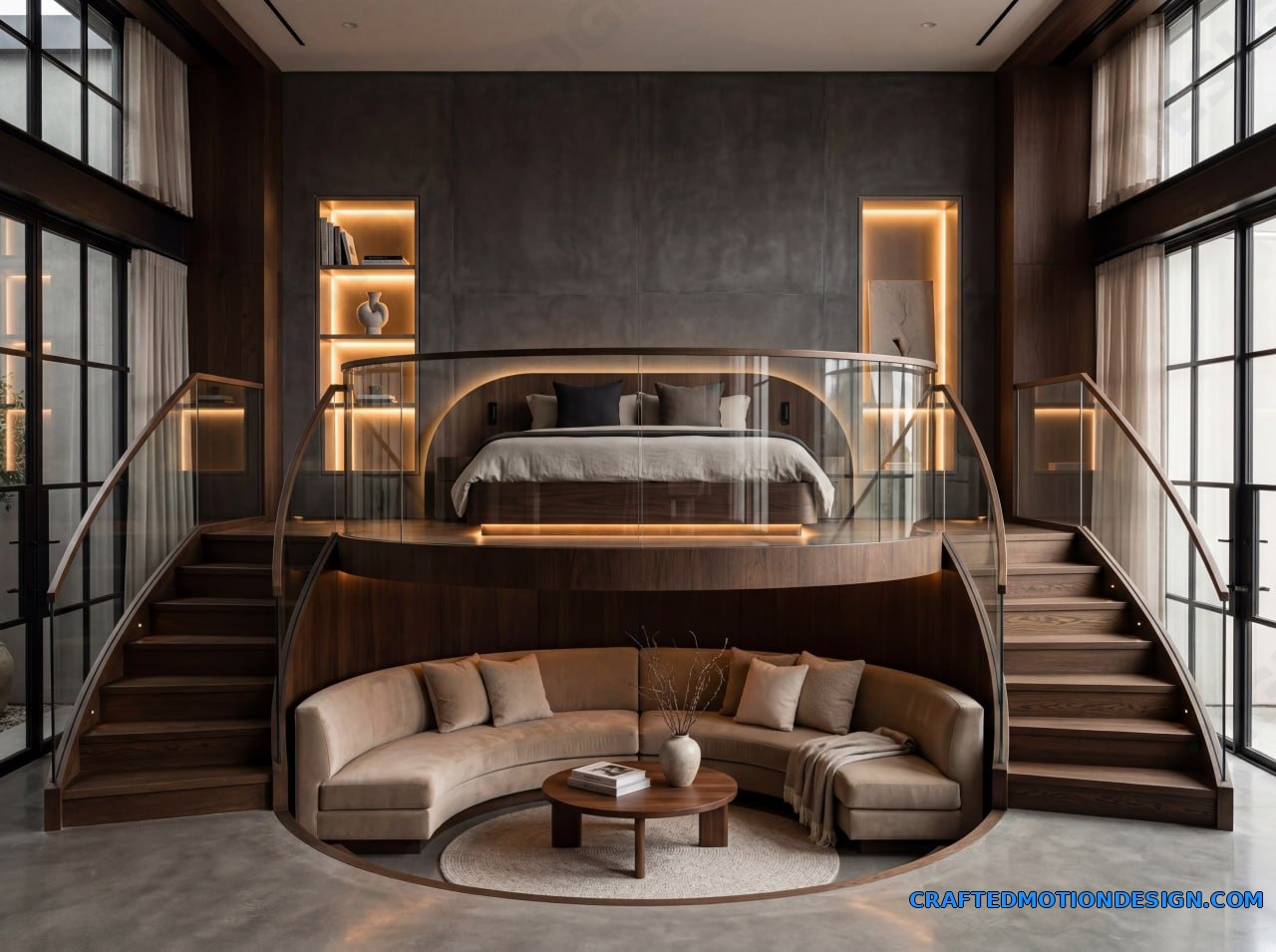
Lighting is a two-layer job. You need ambient light above the platform and task or mood lighting below. The space under a loft bed can feel like a cave if you don’t address lighting intentionally. LED strip lights along the underside of the platform, a small pendant or sconce in the reading nook, directional lighting at a desk, these things transform the vibe entirely.
Ventilation and warmth. Heat rises. The sleeping area on a loft platform will be noticeably warmer than the floor level. If you’re in a warm climate or dealing with a poorly ventilated room, this is something to plan around, a ceiling fan, good airflow, lighter bedding than you’d normally use.
Design Styles Worth Knowing
Elevated loft beds aren’t a single aesthetic, they plug into a lot of different design languages, and knowing which one fits your space helps you shop smarter and avoid the mismatched-furniture trap.
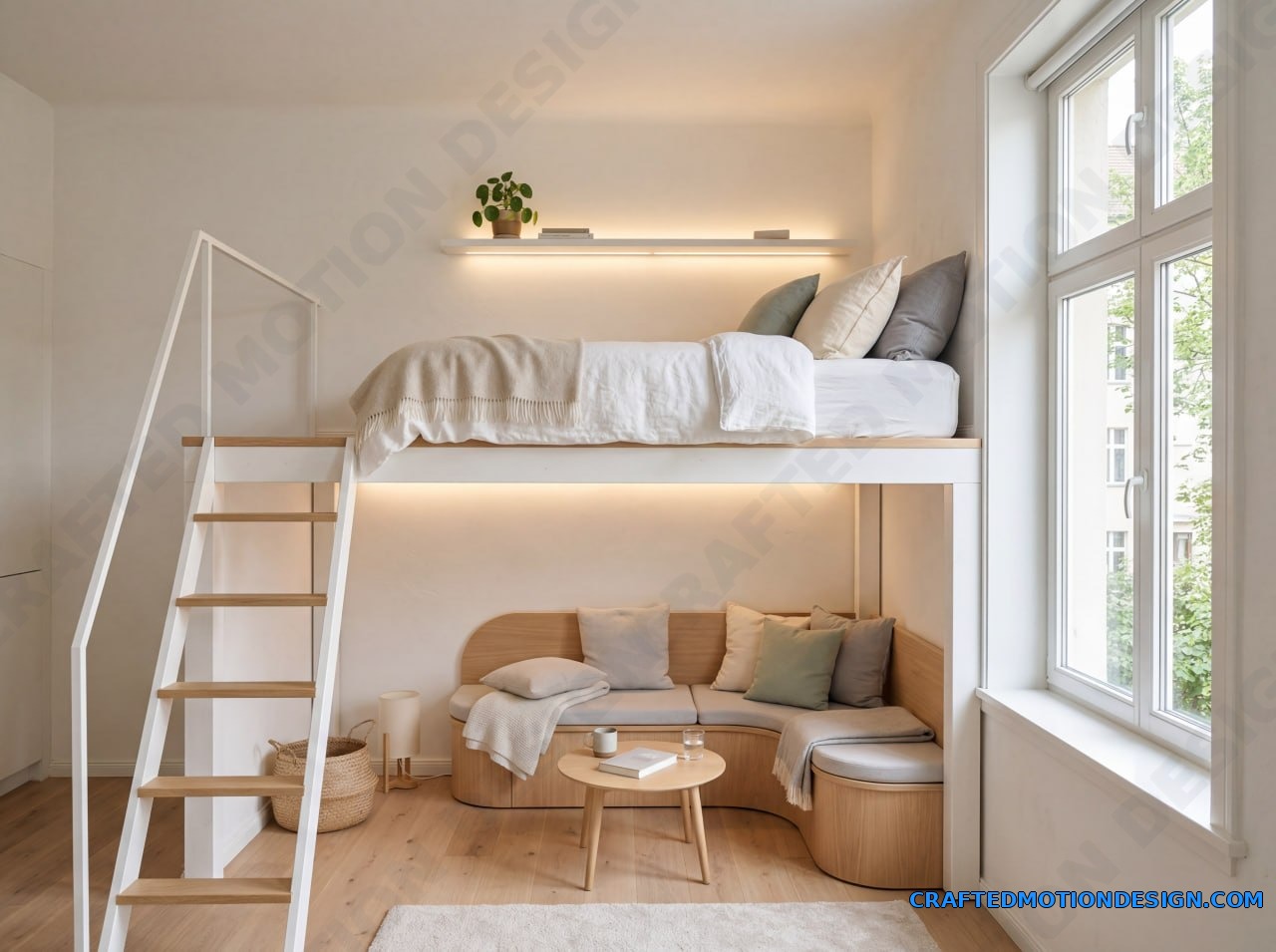
Scandinavian minimalism. Clean lines, natural wood, white or light neutral finishes. The loft frame is usually simple and structural, no ornamentation. The space underneath is uncluttered and intentional. This style photographs beautifully and works in almost any room. If you’re not sure what you want, start here.
Industrial. Black steel frames, raw wood planks, exposed hardware. This style leans into the structural nature of a loft bed rather than hiding it. The ladder is often a standout element. Works especially well in lofts, converted spaces, or rooms with concrete or exposed brick elements.
Japandi. A hybrid of Japanese and Scandinavian sensibilities. Warm wood tones, low-profile design elements, intentional negative space. The loft platform itself tends to be lower profile, just high enough to create useful space below, not dramatically elevated. Every element earns its place.
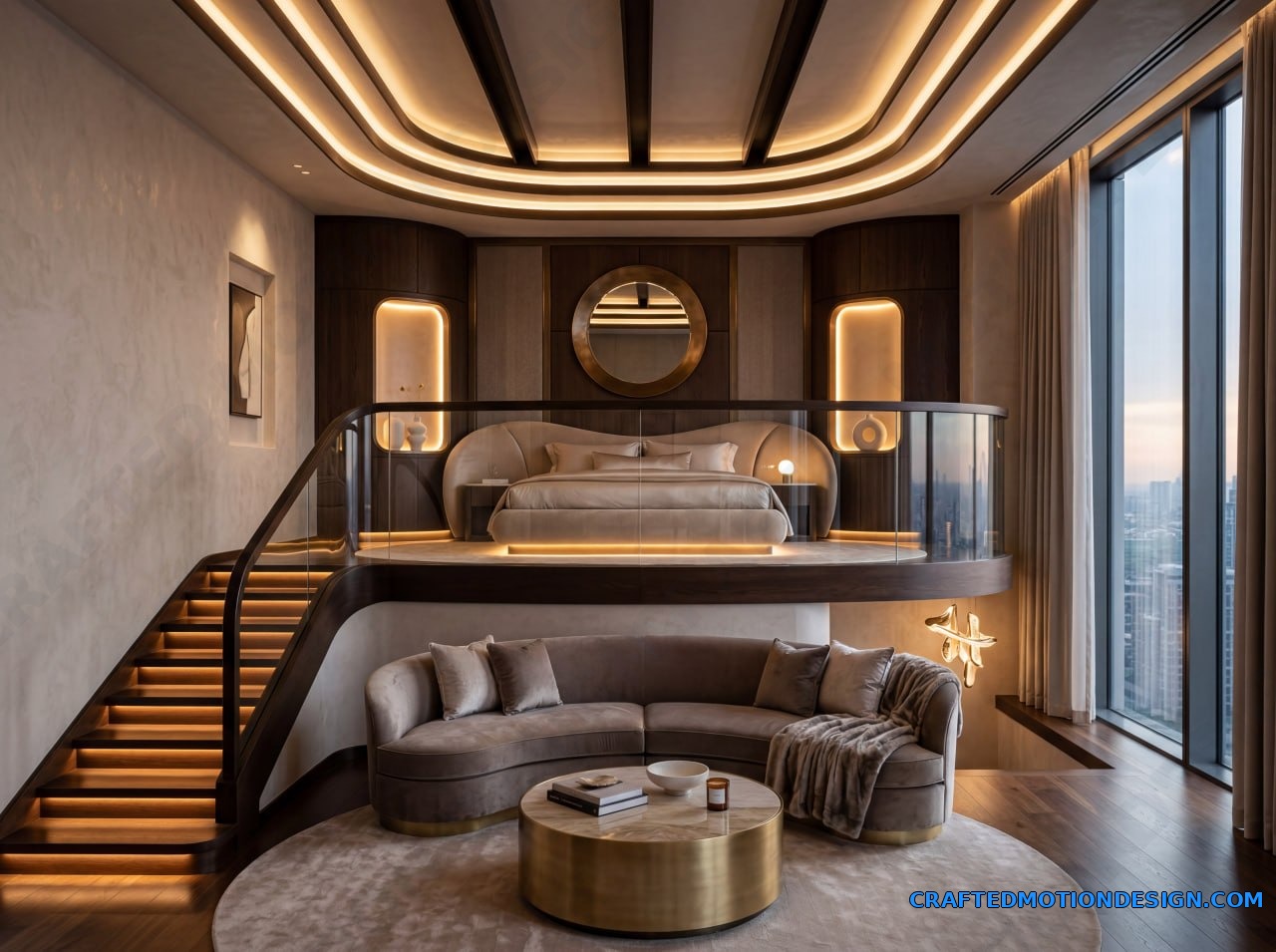
Maximalist or Dark Academia. Rich colors, layered textures, bookshelves below, moody lighting, velvet and warm brass accents. This style leans into the nook-like quality of the space under the loft. The bed area above might have curtains for extra drama and enclosure. This is the style that goes most viral on aesthetic feeds because the transformation is so visually dramatic.
Kids and playful. Built-in slides, themed elements, chalkboard surfaces, bold colors. For younger kids, the loft becomes a castle, a treehouse, a spaceship. This category has evolved significantly, the good versions now look like they were designed by an actual designer, not just bolted together from a flat-pack box.
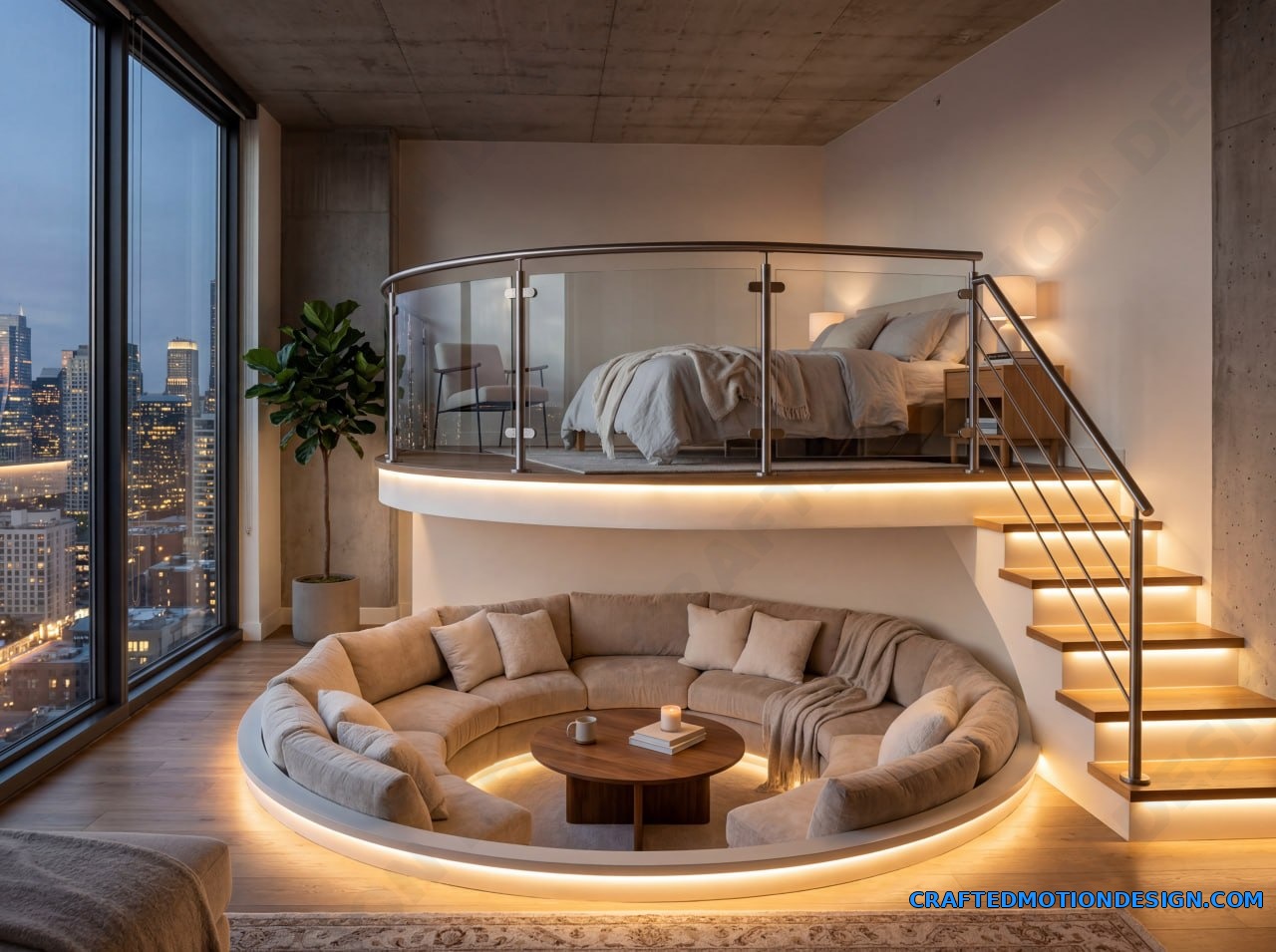
Shop Similar, Affiliate Links
🛒 Shop Similar
Disclosure: This post contains affiliate links. If you buy through them, Crafted Motion may earn a commission at no extra cost to you.
Ready to reclaim your vertical space? These are the best places to start:
- Full/queen loft bed frames for adults, solid options in the $300-800 range
- Loft beds with desk underneath, the most popular setup for small spaces
- Loft beds with stair storage, stairs beat ladders every time
- LED strip lights for loft beds, transforms the under-bed space immediately
Product availability note
Some images in this post are design inspiration. Shopping links may point to similar searches or the closest available product options, not guaranteed exact matches. Always verify the current listing photos, dimensions, materials, seller details, and return policy before buying.
Final Thoughts
Elevated loft beds are one of those rare furniture concepts that genuinely changes how a room functions, not just how it looks. When it’s done right, you’re not just adding a bed to a room. You’re creating two distinct spaces, each with its own purpose and atmosphere, stacked vertically in the same footprint you already had.
The fact that this concept is trending right now isn’t a coincidence. It solves a real problem, the disconnect between the space we want and the space we can afford, and it solves it with style. That’s a combination that tends to stick around.
If you’re seriously considering one, do the ceiling math first. Then plan the underspace. Then find the aesthetic that fits your room. In that order. Get those three things right and the rest of the build decisions become a lot easier.
This is one of those bedroom upgrades that, once you see it done well, makes every other option look like a missed opportunity.
You Might Also Like
- 10 Bed Frames With Built-In Dog Pods That Pet Owners Are Obsessed With
- Wooden Ship Cat Playgrounds Turn Empty Walls Into a Full-Time Cat Adventure Zone
- Skull Shaped Washer and Dryer Sets Are the Most Unexpected Home Upgrade We’ve Seen
Crafted Motion is a participant in the Amazon Services LLC Associates Program. Some links in this article are affiliate links, if you purchase through them, we may earn a small commission at no extra cost to you.